
When love feels distant — The quiet patterns we carry from our family
A reflection on how early family dynamics quietly shape the way we seek love, closeness and safety later in life. This reflection is based on a story shared by a client. Details have been adapted to protect privacy.
Danae
12/11/20253 min read
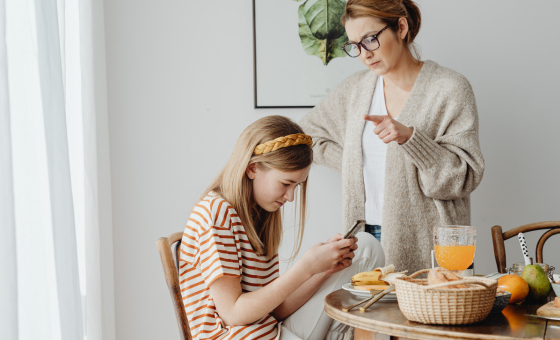
Some family stories are not loud or dramatic.
They don’t come with obvious conflicts or clear villains.
They are quieter than that.
They live in absence.
In distance.
In what was never said or never felt.
Growing up, I learned early on how to make sense of emotional gaps.
How to interpret silence.
How to live with love that felt conditional, uneven, or far away.
Not because there wasn’t care but because life, circumstance, and survival required distance.
And as a child, distance is rarely understood.
It is felt.
When closeness is inconsistent, we learn to adapt
Many children grow up learning to adjust themselves to what feels available.
To become quieter.
More pleasing.
More resilient than their age allows.
Sometimes we internalise the belief that affection must be earned.
That love comes with conditions.
That safety lives outside of ourselves.
These beliefs don’t always show up as conscious thoughts.
They become patterns.
Patterns in how we attach.
In who we feel drawn to.
In what kind of love feels familiar.
What I learned
I learned that making ourselves small is not a personality trait.
It’s a protective strategy one that often starts in childhood.
We shrink when:
• love feels unpredictable
• we fear rejection
• we become the peacemaker
• we learn that our needs are “too much”
• we grew up scanning for emotional danger
• or we were valued more for our usefulness than for our being
But the truth is this:
you don’t have to earn space... you already belong here.
Unlearning this takes time, compassion and a lot of gentleness.
But it’s possible.
Beautifully possible.
The invisible bridge between family and relationships
As adults, we often believe we are choosing freely yet many of our relational choices are shaped by early emotional experiences.
It’s not uncommon to seek, later in life, what once felt missing: warmth, reassurance, emotional presence, protection.
We may feel drawn to relationships that promise maturity, stability or care, hoping, quietly, that this time the distance will close.
Not because we are broken.
But because we are human.
A pattern that deserves compassion not judgment
One pattern I see often and recognise deeply is the longing to be chosen, seen or held in ways that once felt uncertain.
This longing doesn’t mean we are stuck in the past.
It means our nervous system remembers.
And while insight can help us understand this,
healing often requires something more gentle, more relational.
A space where these patterns can be explored without blame, without sides, without needing to relive pain.
Family relationship are not about fault but meaning
Working with family and parent-child relationships isn’t about pointing fingers.
It’s about understanding how love was expressed, interrupted, adapted.
It’s about reconnecting with our own story — and deciding what we want to carry forward.
When we give meaning to our past,
we loosen its grip on our present.
If this resonates
If you recognise yourself in this reflection in the quiet adaptations, the search for closeness, the relational echoes you’re not alone.
Exploring family dynamics with support can bring clarity, relief and a new sense of agency.
If you’d like to work through these themes individually or in relation to parenting or family bonds you can learn more about psychologist-led coaching for family and parent-child relationships in the Netherlands, including Utrecht, Amsterdam, Amersfoort and The Hague.
👉 Explore family & parent-child support or


Contacts
Danae J. Utrecht, clinical psychologist
Aletheia Psychology · Psychologist-led coaching in Utrecht, Amersfoort, Amsterdam, The Hague and online.
Helping individuals, couples and parents create clarity, balance and meaningful change.
Website built with Pureflow Stories © Aletheia Psychology 2025 — All rights reserved.