Based in the Netherlands


Explore our resources
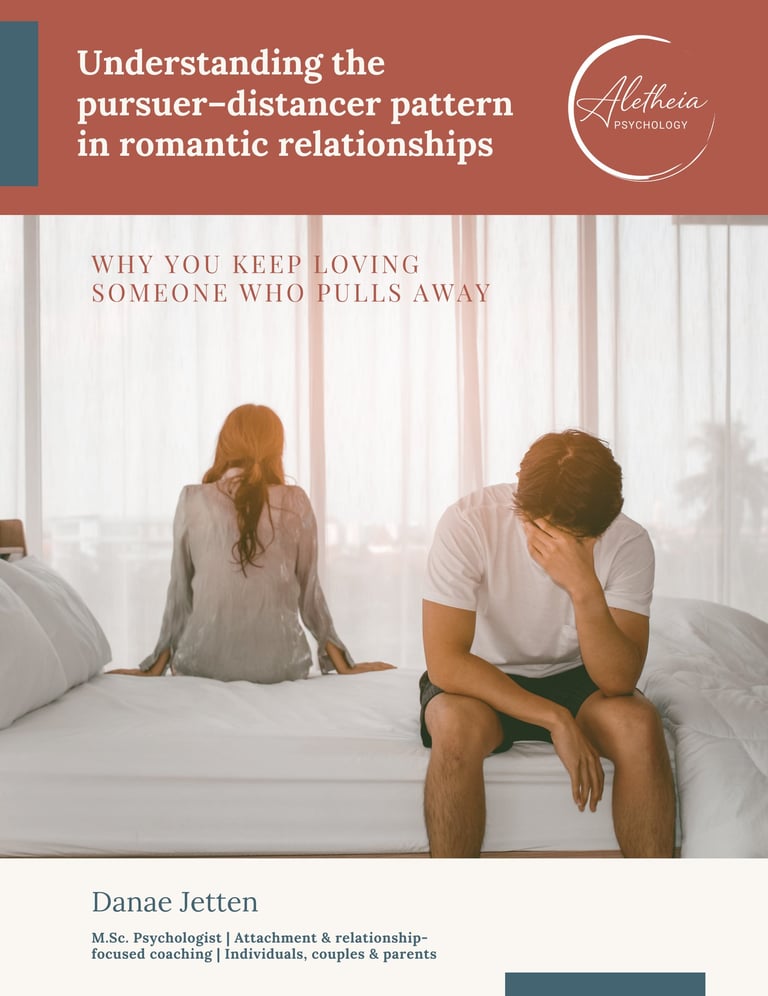
Understanding the pursuer–distancer pattern
Why one partner seeks closeness while the other pulls away and how to change the dynamic
In many relationships, conflict doesn’t look like fighting.
It looks like one person reaching out and the other retreating.
The more one pursues, the more the other distances.
And both end up feeling misunderstood, disconnected and alone.
This in-depth resource explores the pursuer–distancer pattern through the lens of attachment theory and psychologist-led relational coaching.
Rather than assigning fault, this guide helps you understand the protective logic behind both roles and how couples can move from reaction to reconnection.
In this resource, you’ll explore:
What the pursuer–distancer dynamic really is (and what it isn’t)
Why closeness and space can both feel unsafe for different reasons
How attachment styles shape emotional reactions in conflict
What each partner is actually protecting beneath the pattern
How to create connection without pressure or withdrawal
This resource is designed for individuals and couples who want to understand their relational patterns and build more secure, responsive and emotionally safe connections.
Who this is for
You feel stuck in a cycle of chasing and pulling away
You experience recurring misunderstandings in close relationships
You fear closeness or abandonment or both
You want to relate with more security, clarity and emotional balance

Boundaries without guilt
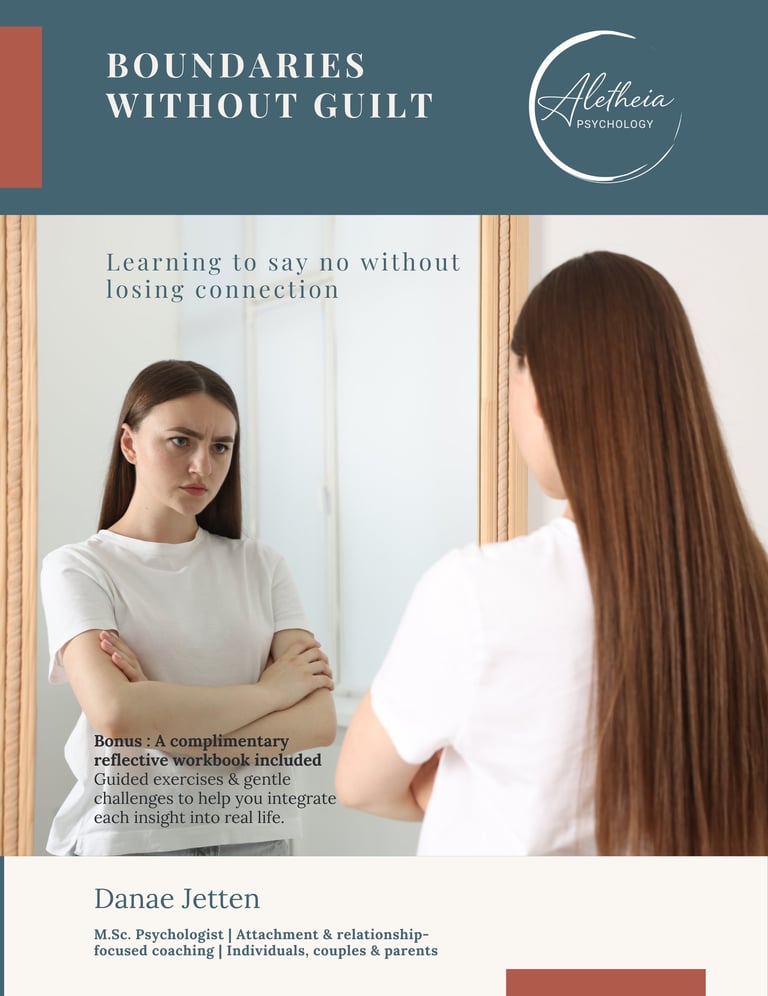
Learning to say no without losing connection
For many people, setting boundaries doesn’t feel empowering it feels terrifying.
Fear of disappointing. Fear of rejection. Fear of being “too much” or “not enough”.
This in-depth resource explores why boundaries often trigger guilt, anxiety and self-doubt especially for those who grew up prioritising harmony, responsibility or emotional caretaking.
Rooted in psychologist-led coaching and attachment-informed understanding, this guide helps you reconnect with your needs without disconnecting from others.
In this resource, you’ll explore:
Why guilt appears when you start setting boundaries
The psychological roots of people-pleasing and over-responsibility
The difference between boundaries and rejection
How to say no while staying emotionally available
How boundaries actually strengthen relationships not weaken them
This resource is designed for individuals who want to build self-trust, emotional clarity and inner safety especially within close relationships, family dynamics and romantic partnerships.
Who this is for
You struggle to say no without over-explaining
You feel responsible for other people’s emotions
You fear losing connection when you honour yourself
You want to develop healthier, more grounded relationships
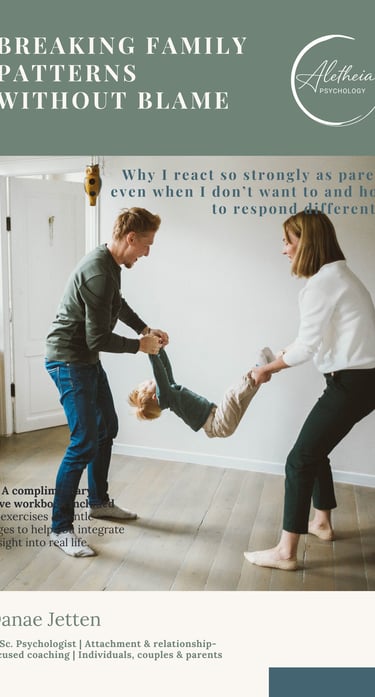
Breaking family patterns without Blame
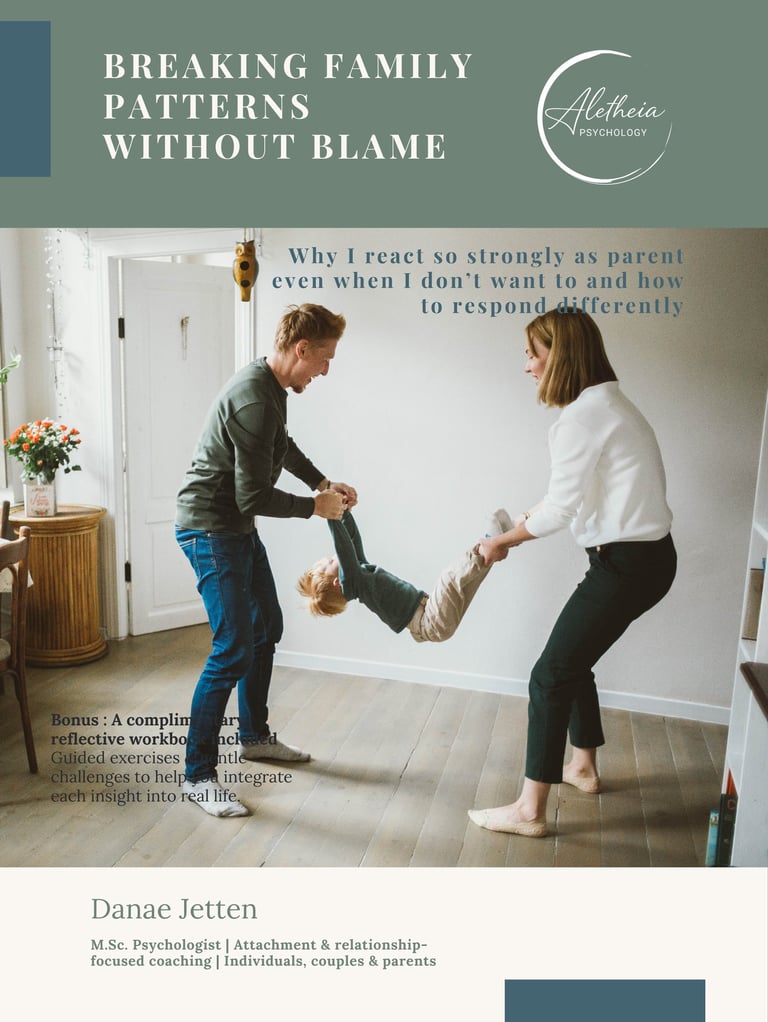
Understanding how inherited dynamics shape parenting and family relationships
Many parents promise themselves they’ll do things differently.
And yet, under stress, exhaustion or emotional activation, familiar patterns reappear.
Not because you’re failing but because family dynamics live in the nervous system, not just in intention.
This in-depth resource explores how certain parenting reactions are often rooted in inherited emotional patterns, rather than conscious choice or lack of effort.
Rooted in psychologist-led coaching, attachment theory and nervous-system-informed parenting, this guide helps you understand where your reactions come from and how to respond with more awareness, flexibility and self-compassion.
In this resource, you’ll explore:
Why we repeat family patterns even when we don’t agree with them
How stress and emotional activation bring old dynamics to the surface
The difference between understanding the past and blaming it
How to respond to your child without abandoning yourself
What it really means to “break cycles” in a realistic, human way
This resource is designed for parents who want to raise their children with more presence, emotional safety and intention without carrying guilt or unrealistic expectations.
Who this is for
You react in ways that surprise or frustrate you as a parent
You fear repeating patterns from your own upbringing
You feel torn between empathy for your child and emotional overload
You want to parent with awareness, not perfection
Contacts
d.jetten@aletheiapsychology.com
+31612761954
Danae J. Utrecht, psychologist
Aletheia Psychology · Psychologist-led coaching online.
Helping individuals, couples and parents create clarity, balance and meaningful change.
Website built with Pureflow Stories © Aletheia Psychology 2025 — All rights reserved.